

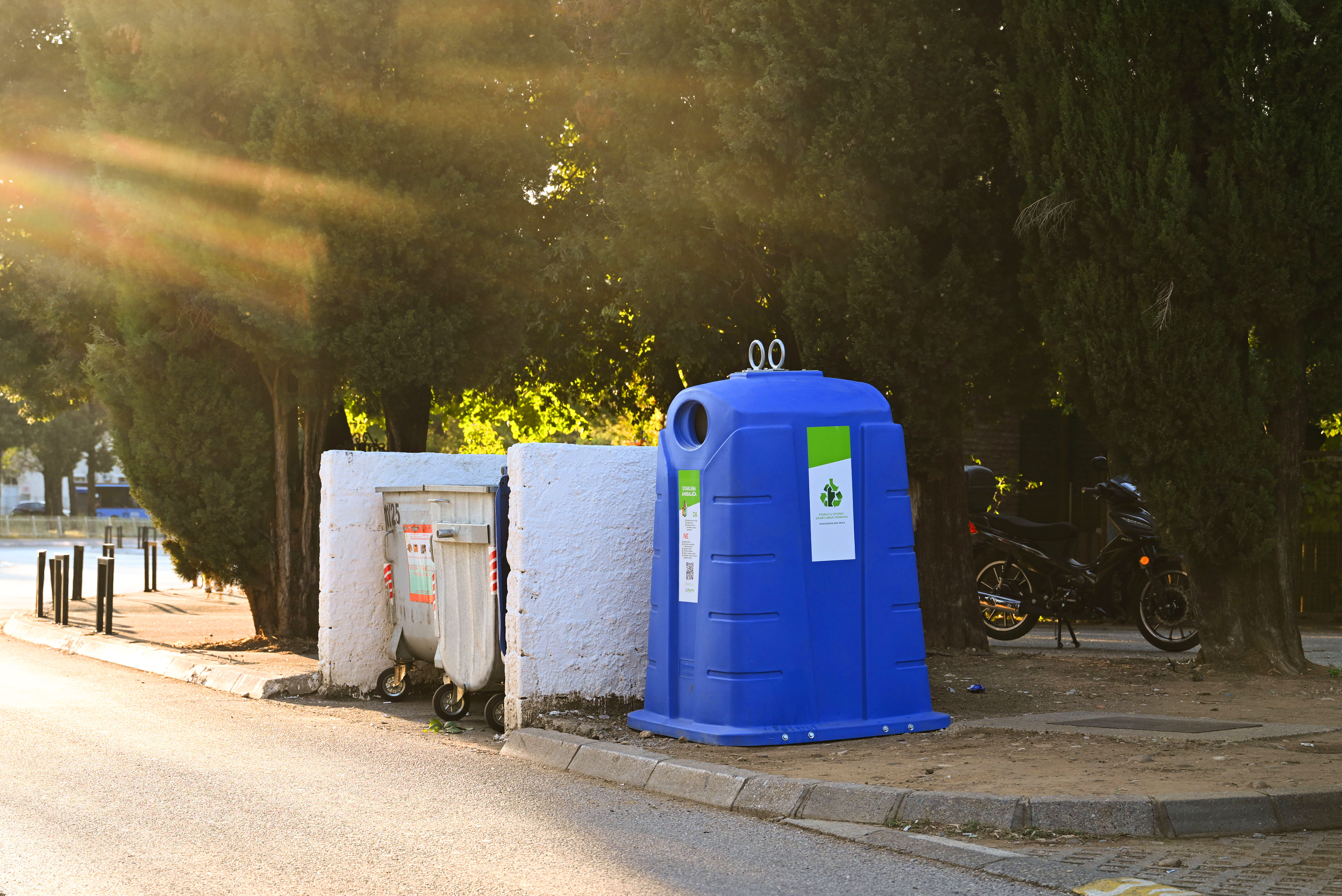
In Podgorica, citizens have at their disposal 25 locations with dedicated bells for disposing of glass packaging. However, in order for this system to really contribute to recycling, it is important to know what can be put in the bells, what does not belong in them and what happens to the glass after collection.
We use glass bottles and jars every day in households, catering establishments and other activities. When they become waste, they often end up in mixed municipal waste containers, even though they represent a valuable material that can be recycled again and again.
That is precisely why Deponija doo Podgorica has established a system of separate collection of glass packaging, which allows citizens to dispose of glass in specially marked locations.
Through the campaign "Glass in the bell - spin the circle again" , the Green Wave program, in cooperation with the Landfill, wants to bring citizens closer to the functioning of this system and encourage the proper separation of glass packaging.
How did the separate collection of glass in Podgorica start?
Deponija doo Podgorica started an organized separate collection of glass packaging in April 2024, first through cooperation with catering facilities.
In October of the same year, the system was expanded by installing dedicated bells at 25 locations throughout Podgorica , which enabled citizens to separate glass bottles and jars from other municipal waste.
The bells are intended exclusively for the collection of appropriate glass packaging. Their proper use reduces the amount of waste that ends up in the landfill, and the glass is directed towards further recycling.
Although the necessary infrastructure has been established, the Landfill indicates that the results so far show the need for greater involvement of citizens and more responsible use of the placed containers.
What can we store in glass bells?
One of the most common doubts of citizens is which types of glass belong to bells for separate collection.
Glass bottles of all colors, glass jars and completely empty glass bottles of cosmetic products can be placed in the bells.
The color of the packaging is not a limiting factor, so transparent, green, brown and other glass bottles are acceptable.
This means that you can store an empty glass bottle of water, juice or other drinks, a jar of jam or winter jelly, as well as a suitable empty cosmetic bottle in the bell.
However, it is important to understand that not every type of glass is suitable for storage in these bells .
What should never be left in the bells?
The following must not be placed in bells for glass packaging:
Although some of these items look similar to glass packaging, their chemical composition and characteristics can differ significantly.
Mixing such materials with bottles and jars can negatively affect the quality of the collected material and make its further recycling difficult.
That is why it is important to respect the intended purpose of the bells and to store them only in suitable glass packaging.
Should glass bottles and jars be washed before disposal?
The good news is that glass packaging does not need to be thoroughly washed before disposal.
The landfill explains that the most important thing is for the packaging to be completely emptied of its contents .
It is desirable to remove product residues, as well as caps and lids, which should then be disposed of in appropriate waste containers.
It is not necessary to remove the labels from the bottles and jars because they can be separated during further processing of the material.
So, before you put the glass bottle or jar in the bell, it is enough to check that it is empty and to remove the cork or cap when possible.
What happens to the glass after we put it in the bell?
Putting the glass packaging in the bell is the first step. This is followed by an organized process of collection, transport and preparation for further recycling. The logistics unit of Deponije doo Podgorica is in charge of collection and transport.
For these needs, the landfill has acquired a specialized vehicle intended for emptying bells and collecting glass packaging. After emptying, the glass is transported to the landfill, where it is temporarily stored until export is organized for further recycling.
In this way, glass packaging is separated from the stream of mixed municipal waste and directed towards reuse as a secondary raw material. This is an important difference compared to the previous practice, when glass together with other municipal waste ended up in sanitary tubs of the Landfill.
How often are the bells discharged?
The bells are not discharged according to a single, predetermined schedule for all locations.
The dynamics of emptying is adjusted to the needs in the field, above all the amount of collected glass packaging and the degree of filling of containers. The landfill plans to further improve this system through the acquisition of sensors to monitor the filling of the bell .
These sensors would enable a more precise insight into the condition of each container, better planning of emptying routes, reduction of unnecessary detours and more efficient use of vehicles and employees.
This is a planned improvement, not a technology that has already been introduced at all locations.
How much glass is collected and exported for recycling?
According to the data provided by the Landfill for the purposes of this article, 1,036.52 tons of glass were exported in 2025 , while 1,028 tons were exported in 2026, by the time the data was submitted .
These data refer to the glass included in the Landfill's collection and export system, which also includes glass packaging from catering establishments, and not exclusively to the quantities collected through bells available to citizens.
The data for 2026 is not the final annual balance.
Nevertheless, the mentioned quantities show the importance of organized collection of glass packaging and its separation from mixed municipal waste.
Improper waste disposal is also a problem
One of the challenges that the Landfill is facing is the improper use of bells. During the emptying, in addition to glass packaging, the presence of mixed municipal waste was recorded, which had to be separated later.
Such a practice requires additional work by employees and complicates the functioning of a system that is intended exclusively for glass packaging. Therefore, citizens are urged not to put bags of household garbage, leftover food or other types of waste in the bells.
The more correctly the glass packaging is separated at the point of origin, the simpler and more efficient its further treatment is.
Why is the separation of glass particularly important for Podgorica?
Glass is a material that can be recycled an unlimited number of times, without losing quality and basic properties. By properly separating it, it can again become a raw material for the production of new glass products, instead of ending up in a landfill.
However, the importance of separate glass collection in Podgorica does not only apply to recycling.
According to the landfill, this company receives municipal waste from 11 Montenegrin municipalities , that is, from the area where more than half of the population of Montenegro lives. This means that a significant part of the country relies on the existing waste disposal infrastructure.
The landfill has five sanitary tubs, the fifth of which is in the filling phase, while the construction of the sixth is planned.
Sanitary bathtubs have a limited capacity and lifespan, so their rational use is of great importance for the long-term sustainability of the waste management system.
Every amount of glass that is separated from the mixed waste means less load for the sanitary tubs and saving space for the waste that has to be disposed of in this way.
This is precisely why the separate collection of glass represents an important step towards the development of a circular economy, in which materials are kept in use as long as possible, instead of becoming waste after one use.
Where are the glass bells in Podgorica?
Citizens currently have at their disposal 25 locations with bells for separate collection of glass packaging .
To make it easier for citizens to find a suitable location, a map with marked bells is also available.
LOOK AT THE MAP OF GLASS BELL LOCATIONS IN PODGORICA
Before disposal, it is necessary to check whether the packaging is suitable, and then dispose of it in a dedicated bell, instead of in a container for mixed municipal waste.
What if the bell is full or damaged?
If you notice that the bell is filled, damaged or there is another problem at the location, you can contact Deponija doo Podgorica directly.
Contact for registration:
Email: [email protected]
Phone: 020 625 046
Office hours for phone applications: weekdays from 7 a.m. to 3 p.m.
By reporting problems, citizens can contribute to the timely response of competent services and better maintenance of the installed infrastructure.
By establishing a system for the separate collection of glass packaging, Podgorica received an infrastructure that enables significant amounts of glass to be separated from mixed waste and directed towards recycling.
However, installing the bell is only one part of the job. In order for the system to function, citizens need to use it regularly and know what they are allowed to put in it.
One properly disposed bottle or jar may seem like a small contribution, but when such a habit becomes part of the everyday life of a large number of citizens, its importance is much greater.
So the next time you empty a glass bottle or jar, don't automatically throw it in the nearest container. Find the nearest bell and put it in the appropriate place.
WHERE IS YOUR NEAREST BELL?
Find it on the map and spin the circle again!
The text was prepared as part of the campaign "Glass in the bell - spin the circle again", based on information provided by Deponija doo Podgorica.


